
January 2026 (130.1)
Article
Karaağaç Tumulus: An Iron Age Elite Burial from Rural Western Phrygia
This article presents the first comprehensive study of the Karaağaç Tumulus, a Middle Phrygian (ca. 800–540 BCE) monumental tomb located at the northwestern edge of the Central Anatolian Plateau, modern Türkiye. Stratigraphic and material evidence indicate a multiphase use, including an Early Bronze Age cemetery, a Middle Iron Age tumulus with elite burial, and Late Antique graves. The architectural form and contents parallel those of Gordion and Ankara, suggesting a high-status interment, possibly linked to regional governance during Midas’ reign. Its remote location—far from known urban centers—challenges traditional models of centralized Phrygian authority and supports recent interpretations of a multipolar political structure of Iron Age Phrygia. The discovery of diverse goods, a Phrygian name inscribed on a jar, and the presence of bronze situlas further attest to elite cultural practices. Despite modern looting, salvage excavations have yielded valuable archaeological and archaeometric data, which places the tumulus between Gordion Tumuli MM and S-1 (740–690 BCE). It also emerges as a key site for understanding the diversity of Phrygian funerary traditions, political organization, and regional interaction in central Anatolia during the late eighth century BCE.
Content warning: Readers are advised that this article contains a photograph of human remains.
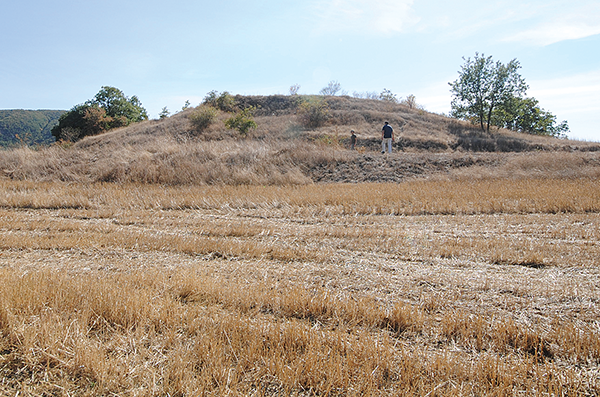
General view of the tumulus before the excavations, from the west (courtesy Bilecik Museum).
More articles like this:
Mortuary • Iron Age • Excavation • Material Culture • Turkey > Central Turkey
General view of the tumulus before the excavations, from the west (courtesy Bilecik Museum).