
April 2026 (130.2)
Article
Exhuming the Archive: Examining the Cemeteries of Antioch-on-the-Orontes Through Legacy Archaeological Research
Parts of ancient Antioch (modern Antakya, Türkiye) were excavated from 1932 to 1939 by a team led by Princeton University. Key findings were published in five volumes, but much more data remains in the excavation’s documentary archives, also held at Princeton. Scattered among published and unpublished documents are records of Antioch’s Roman necropoleis. This article consolidates the excavation’s findings, many for the first time. While many of the graves were not systematically recorded or extensively explored, together they give an impressionistic view of the death cultures of ancient Antioch. Included in the supplementary material online are tables that present objects, site plans, and photographs that are intended to work as finding aids for future researchers using the Antioch excavation’s online archives.
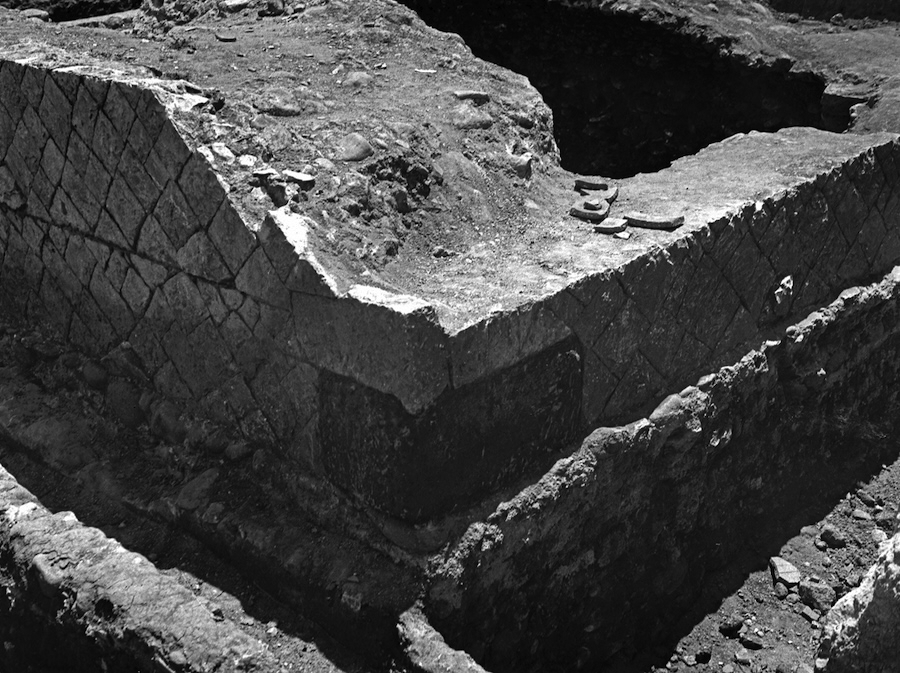
The “grand tombeau” faced with opus reticulatum, in sector 20-H of the Southwestern Necropolis (Photo N366; courtesy Antioch Excavation Collection, Department of Art and Archaeology, Princeton University).
The “grand tombeau” faced with opus reticulatum, in sector 20-H of the Southwestern Necropolis (Photo N366; courtesy Antioch Excavation Collection, Department of Art and Archaeology, Princeton University).