
October 2026 (130.4)
Article
Divus Hadrianus, Divus Constantius Chlorus, and the Apotheosis of Hercules: The Tondo Reliefs of the Arch of Constantine
By Susan Wood
The second-century CE relief tondi now on the fourth-century CE Arch of Constantine are anomalous both in subject matter and in format. Among these eight reliefs, the scenes of the lion hunt and of the sacrifice to Hercules differ strikingly from the others, as well as from conventional iconography. The sacrifice to Hercules shows the image of the hero as an apparition in the heavens rather than a statue on a pedestal, a composition that perhaps calls attention to the unique status of Hercules as a mortal who won immortality through his noble deeds, just as worthy Roman emperors received apotheosis. The original patron of the tondi, probably Antoninus Pius, may have sought to justify the controversial deification of his predecessor Hadrian. The later reuse of the reliefs on the arch to honor Constantine similarly invoked the deification of his father, Constantius Chlorus, in support of Constantine’s claim to power.
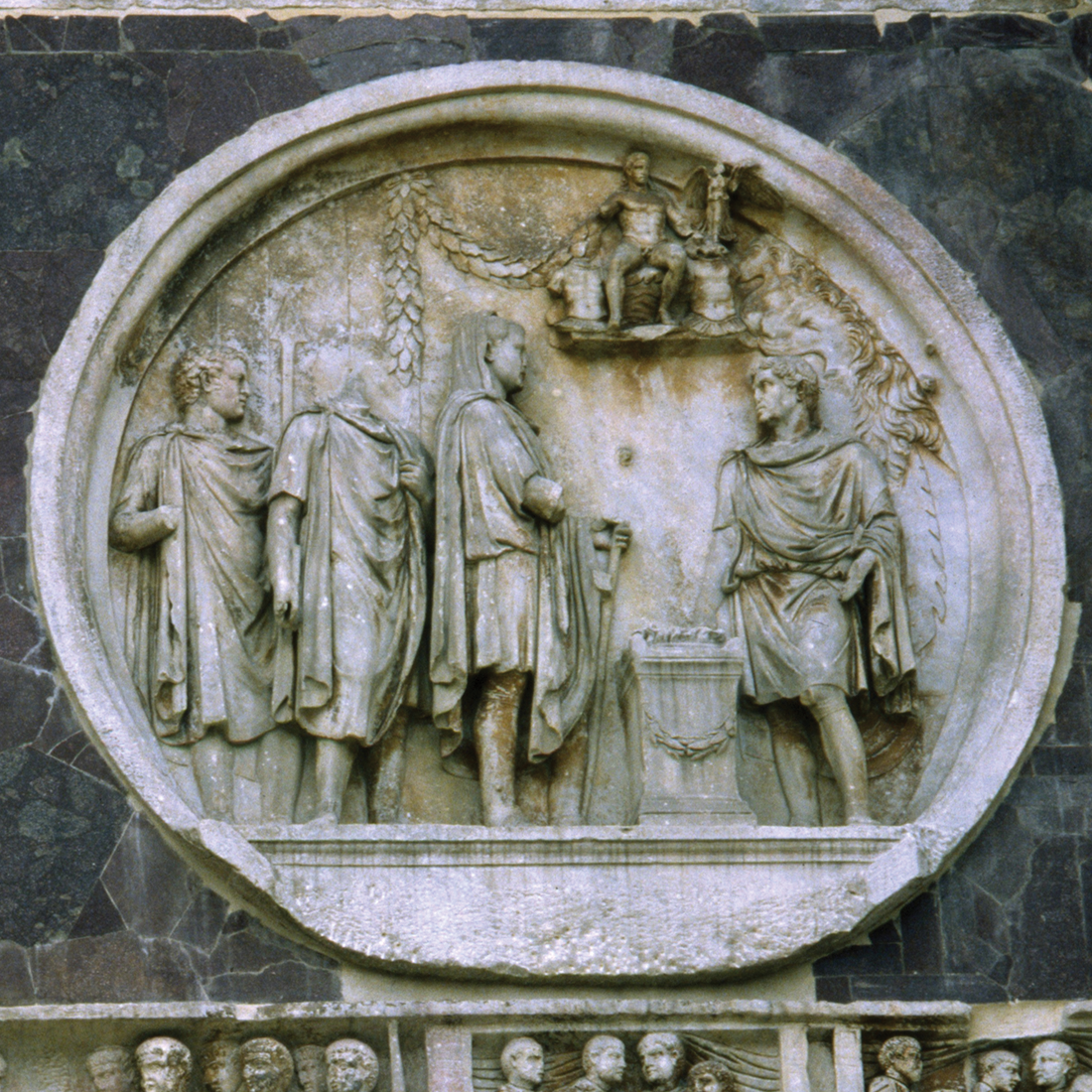
Hadrianic tondo N4 on the west pier of the north face, sacrifice to Hercules, ca. 140–145 CE (V. Pirozzi; © AKG Images).
More articles like this:
Iconography • Sculpture • Art History • Roman Period • Religion/Cult • Italy > Rome
Hadrianic tondo N4 on the west pier of the north face, sacrifice to Hercules, ca. 140–145 CE (V. Pirozzi; © AKG Images).